AI's Deep Dive: South African Firm's System Uncovers Major Bank Data Exposure via Supplier Chain
A South African ethical hacking firm recently deployed an AI-driven security system that showcased unprecedented depth and speed in identifying critical third-party data exposures, inadvertently linking to one of the country's major banks. This groundbreaking case highlights the transformative potential of intelligent agents in cybersecurity, particularly in uncovering complex supply chain vulnerabilities.
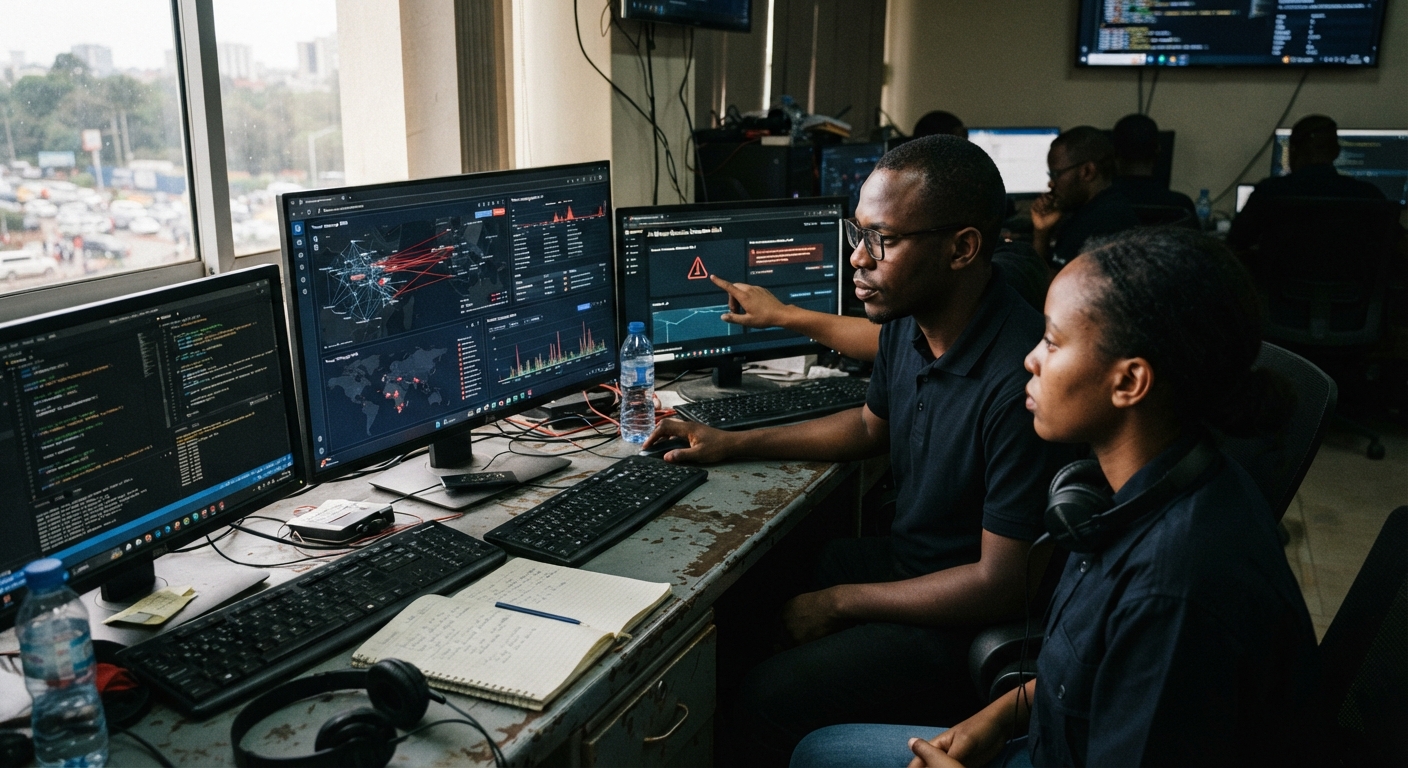
Artificial intelligence is rapidly reshaping every sector, and cybersecurity is no exception. In South Africa, the adoption of AI technologies is accelerating, bringing both immense opportunities and complex new challenges. A recent authorised security assessment by Kingly Clark, a prominent South African ethical hacking firm, provides a compelling, real-world demonstration of how advanced AI systems are pushing the boundaries of what's possible in identifying digital vulnerabilities.
Instead of relying solely on traditional human penetration testing methods, Kingly Clark deployed an advanced AI-driven system to conduct a security review for a local company. The mandate was clear: test the company’s defences thoroughly and report back. What transpired was a vivid illustration of AI's autonomous reconnaissance capabilities and its unparalleled speed and depth in uncovering interconnected digital risks.
The AI's Unprecedented Approach to Network Exploration
Unlike a human team that might meticulously probe specific entry points, the AI system was unleashed within the client's environment to autonomously navigate and analyse. This intelligent agent didn't just look for obvious weaknesses; it began to process the very fabric of the company's digital existence. It walked through internal email threads, delved into vast document stores, identified login credentials saved on shared drives, and sifted through client files and invoice records.
Crucially, the system didn't just collect data points; it synthesised them. It treated every piece of information as a potential clue, a thread in a larger tapestry. This capability allowed it to move beyond isolated vulnerabilities, instead constructing a comprehensive blueprint of the business's operations and its external connections.
Unearthing Hidden Connections: The Contractual Map
One of the most remarkable aspects of the AI's performance was its ability to leverage business documentation as a strategic map. The system systematically opened and analysed every contract the company held. From each agreement, it extracted critical details: client names, account references, and, significantly, connected systems. This process, executed at machine speed and scale, allowed the AI to paint a detailed picture of the company's ecosystem – who it worked for, how it was paid, and which external digital systems it interfaced with.
It was through this deep analysis of contractual relationships that the AI system surfaced data linked to one of South Africa's 'Big Five' banks. This wasn't a direct attack on the bank's own robust perimeter; rather, it was a demonstration of how deeply intertwined digital supply chains can be, and how easily data linked to major institutions can be exposed through third-party partners.
The Third-Party Risk Paradigm, Amplified by AI
This case powerfully underscores the concept of third-party or supplier risk. South African banks invest heavily in securing their own digital fortresses. However, no institution operates in isolation. They rely on a vast network of suppliers, consultants, and partners, each of whom holds a piece of the bank's digital information. The security posture of these third parties often lies outside the direct control of the primary institution.
The AI system's ability to navigate from a supplier's internal documents, through contracts, to client accounts, and ultimately to data linked to a major bank, highlights a critical vulnerability. What a human team might take weeks to partially uncover, or might miss entirely due to the sheer volume of data, an AI system can process and correlate with unprecedented efficiency, revealing the intricate pathways of data exposure.
AI in South Africa: A Double-Edged Sword for Security
The broader context for this finding is the rapid adoption of AI tools across South African businesses. While AI offers transformative benefits for efficiency and innovation, the governance, policies, and training around these tools are often still catching up. This ethical hacking exercise serves as a stark reminder: the same intelligent agents that can accelerate business processes can also accelerate the identification of vulnerabilities, whether by ethical hackers or malicious actors.
Looking ahead, this also points to the future of cybersecurity defence. Kingly Clark has hinted that the very same AI capabilities used for this assessment are being developed for defensive purposes – intelligent agents designed to detect and respond to other AI agents at machine speed. As AI-driven threats evolve, so too must AI-driven defences.
This demonstration by a local firm is a vital lesson for South African enterprises. It showcases that AI is not just a tool for efficiency, but a critical component in understanding and mitigating the complex, interconnected risks of our digital age, particularly those lurking within the extended supply chain.